The 48th Generation. Terra Nova
Forty-eight real generations of E. coli from a synthetic-biology "bacterial treadmill" experiment, rewritten as 48 day–night cycles of a game-like generative installation in which every bacterium is a translucent architectural organism. With Wu Ziyang.
Launch work ↗Translated by AI
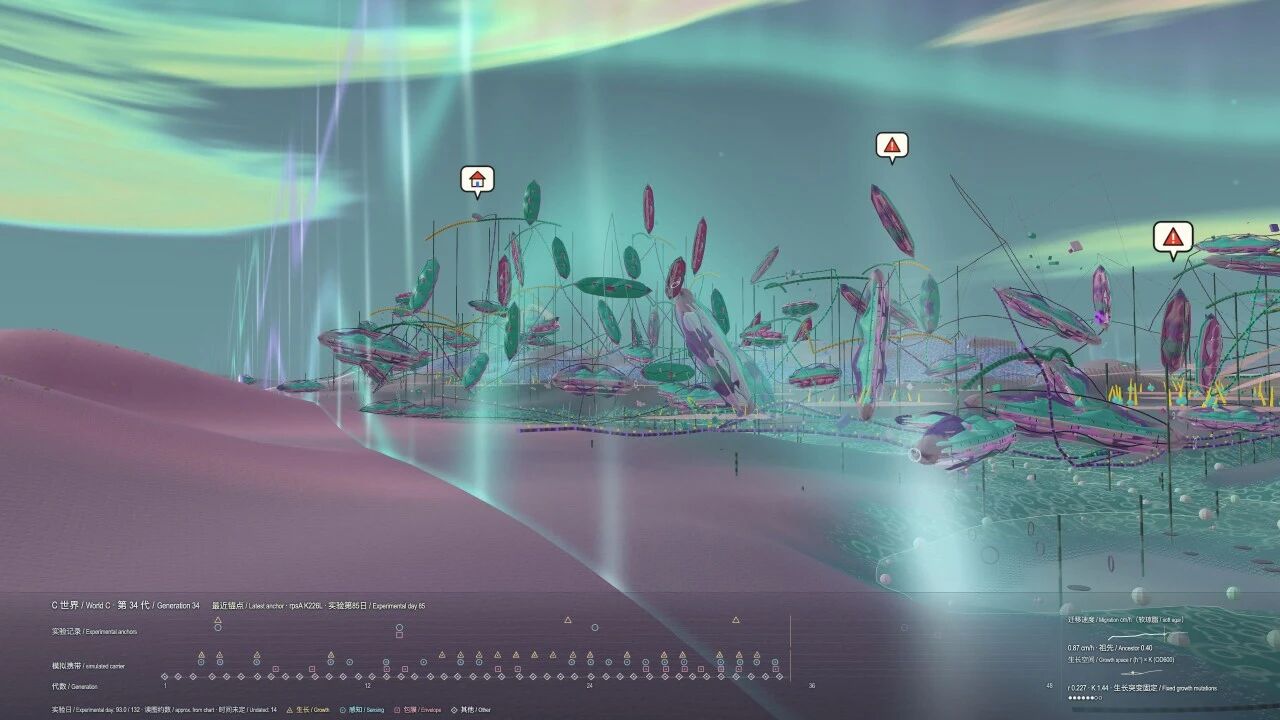
The 48th Generation is a game-like real-time generative installation by Wu Ziyang and Simon Meng. It grew out of our residency at the Shenzhen Synthetic Biology Research Infrastructure, in collaboration with synthetic biologist Prof. Yi Xiao and his “bacterial treadmill” experiment.
The bacterial treadmill
In the experiment, E. coli is placed on a continuous strip of culture medium. Old medium is removed from behind while new medium is added in front, like a treadmill, continuously selecting bacteria that grow and migrate faster. What gets recorded is not only their growth trajectories but also the mutations that occur at different times, and how those mutations affect survival, reproduction and migration.
From a kill line to a civilisation
Our first association was a “kill line”: the experiment has an obvious social-Darwinist bent, pushing and reinforcing survival of the fittest. But as we talked, we realised the world is already saturated with negative takes on competition, and that this habitual negativity has become a stereotype of its own.
Seen differently, the bacteria are not merely forced to survive. Through daily reproduction, growth, migration, mutation and death, they build a civilisation of their own. Borrowing the biological notion of Umwelt, they do not only perceive the world; with their bodies, behaviours and the husks they leave behind, they shape their own environment. Insignificant as they are, they are working to hold up their civilisation.
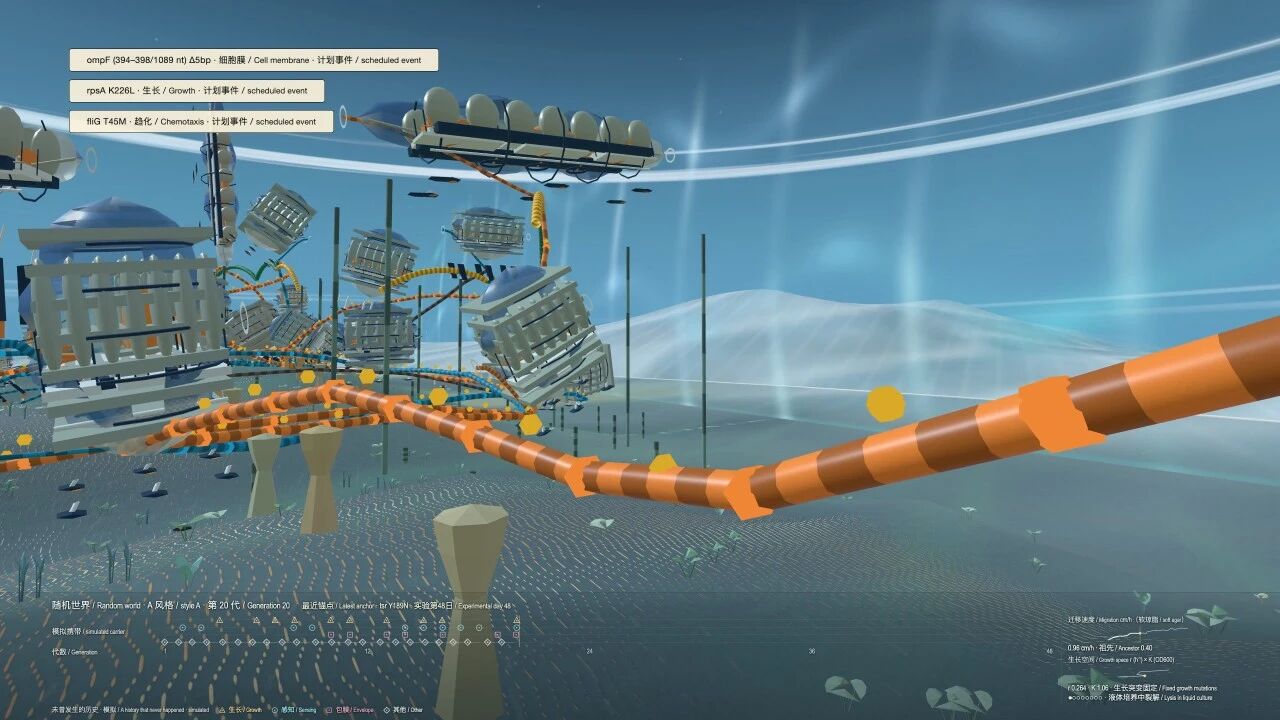
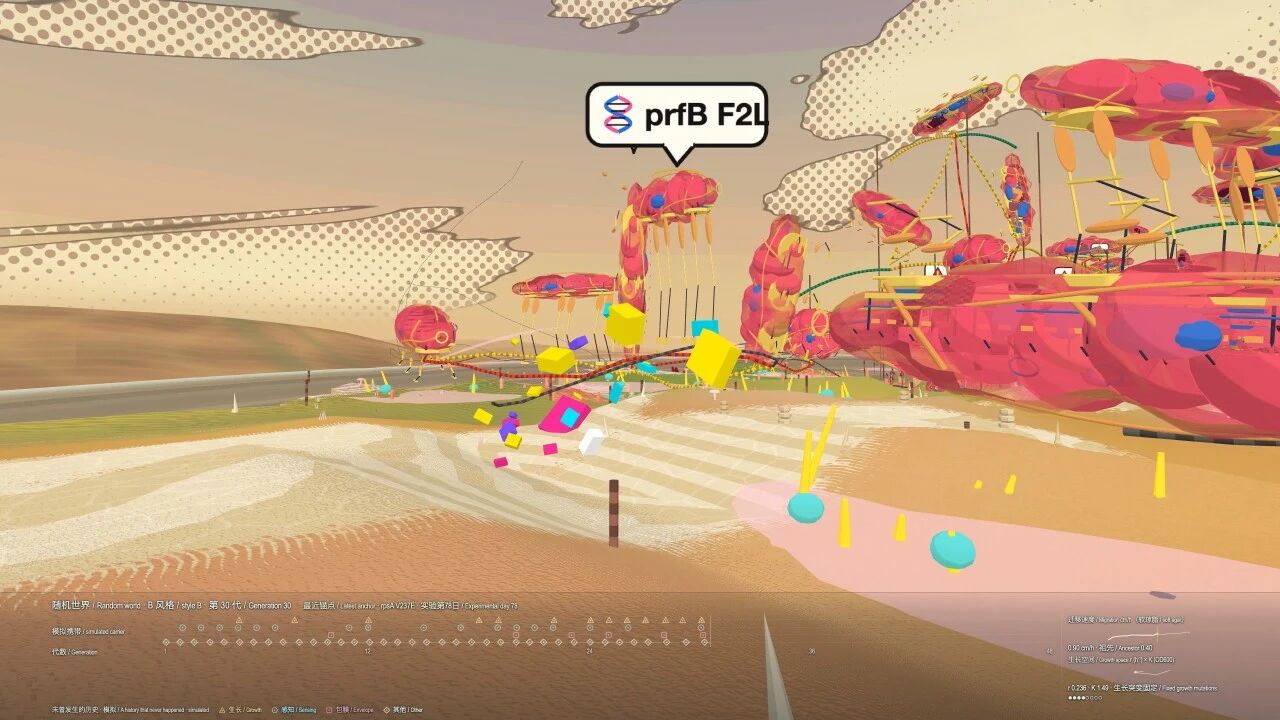
So we borrowed Archigram’s Walking City and Plug-in City: every bacterium becomes a translucent “architectural organism”. Genetic changes alter its internal chambers, interfaces and form, like a renovation happening inside a body. They are elements of the environment and interact with it fully — and that interaction is where the force of life breaks out.
Forty-eight days and nights
Based on the real data, the evolution from the 1st to the 48th generation is turned into round after round of iterative races. The 48 generations of the experiment become 48 one-minute day–night cycles; at the end of each day, the gaps and resources left behind become the environment of the next generation. The experiment has three evolving populations, matching the installation’s three screens, which act like moving observation windows, cutting between the vast “city” of the population and the interior of a single bacterial building.
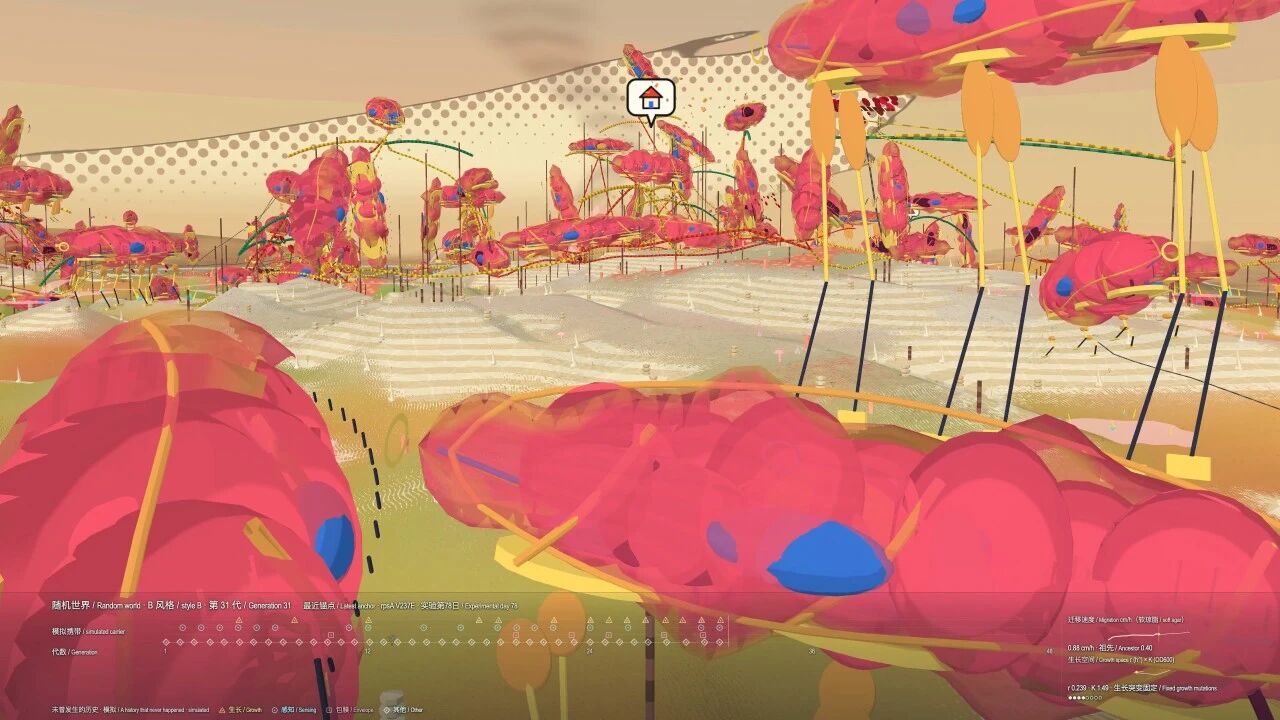
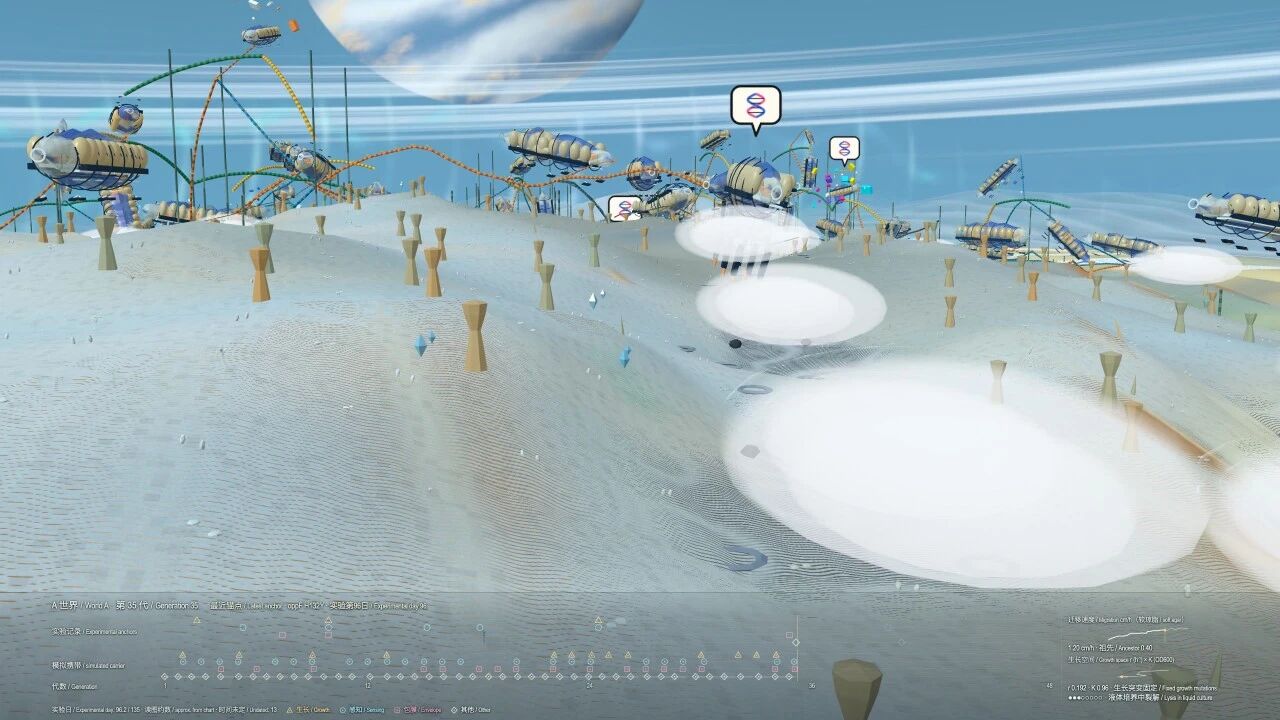
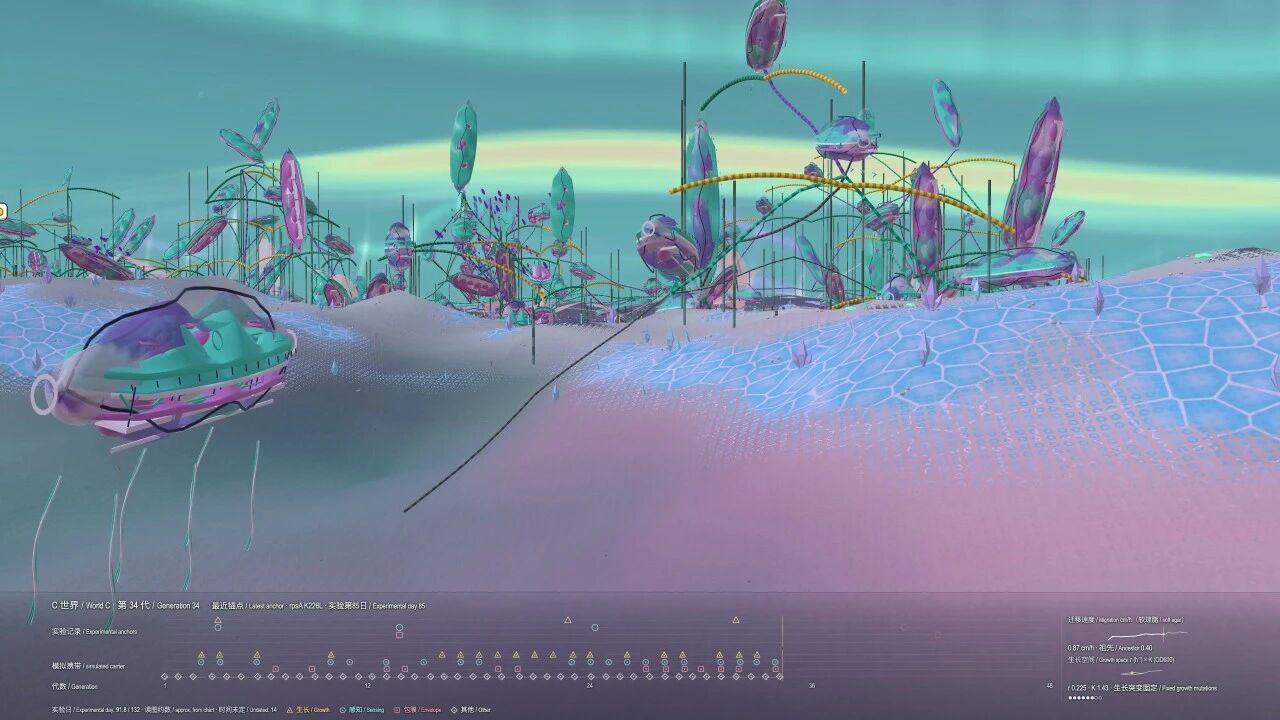
There is also an online version. Its top-right menu holds many debugging tools — including an easter egg that lets the system simulate evolution on its own instead of replaying the data of populations A, B and C.
Exhibited: Tank Shanghai
From 30 October 2026 to 24 January 2027 the work is shown in Terra Nova, the first exhibition of X-TRA, the digital-art strand of the 25th China Shanghai International Arts Festival, at Tank Shanghai (curated by Qiao Zhibing), alongside Pierre Huyghe, Refik Anadol, dmstfctn, Cao Shu and Qiu Anxiong — in fuel tanks of the former Longhua Airport, turned from storing fuel to storing data.
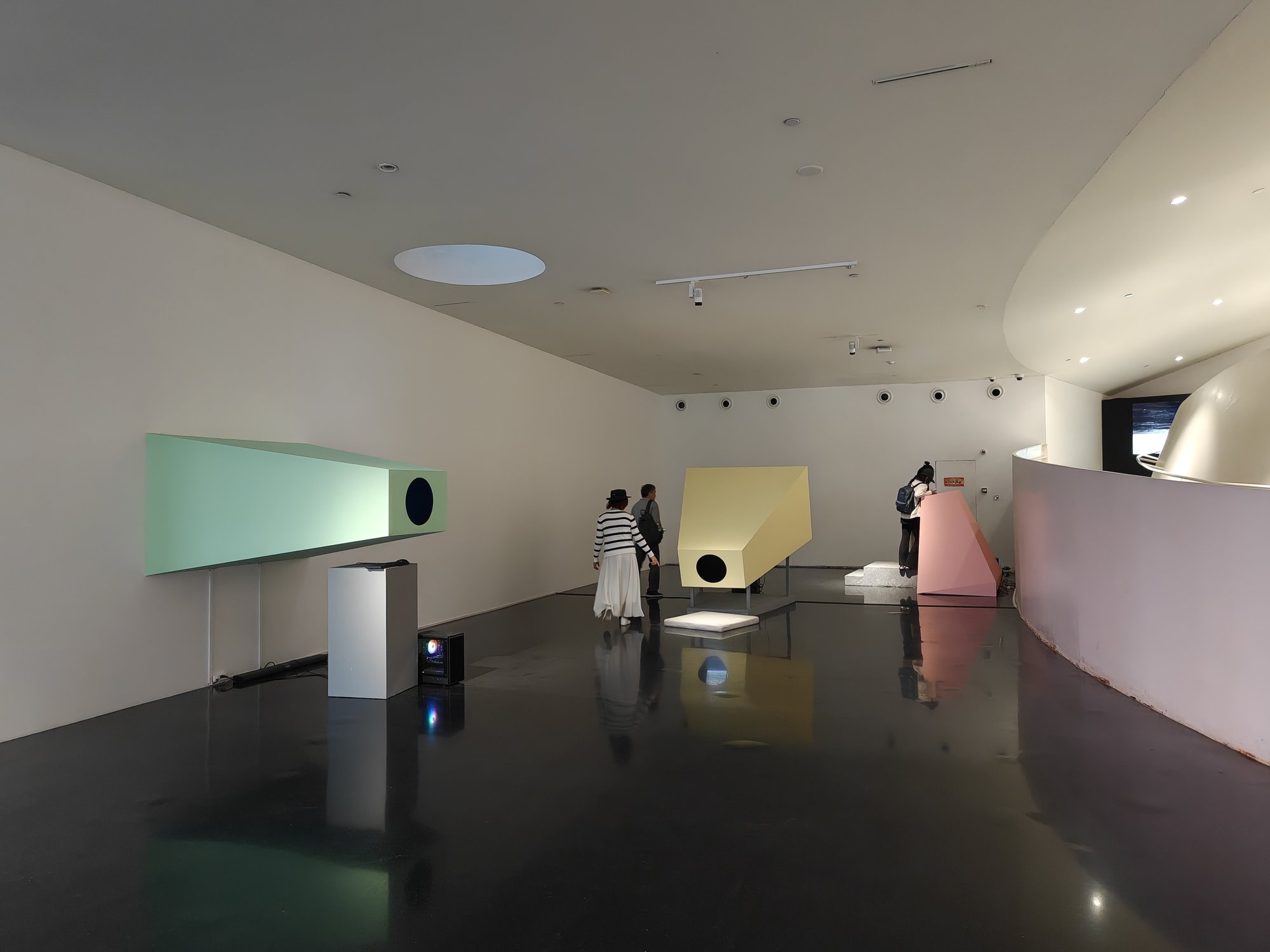
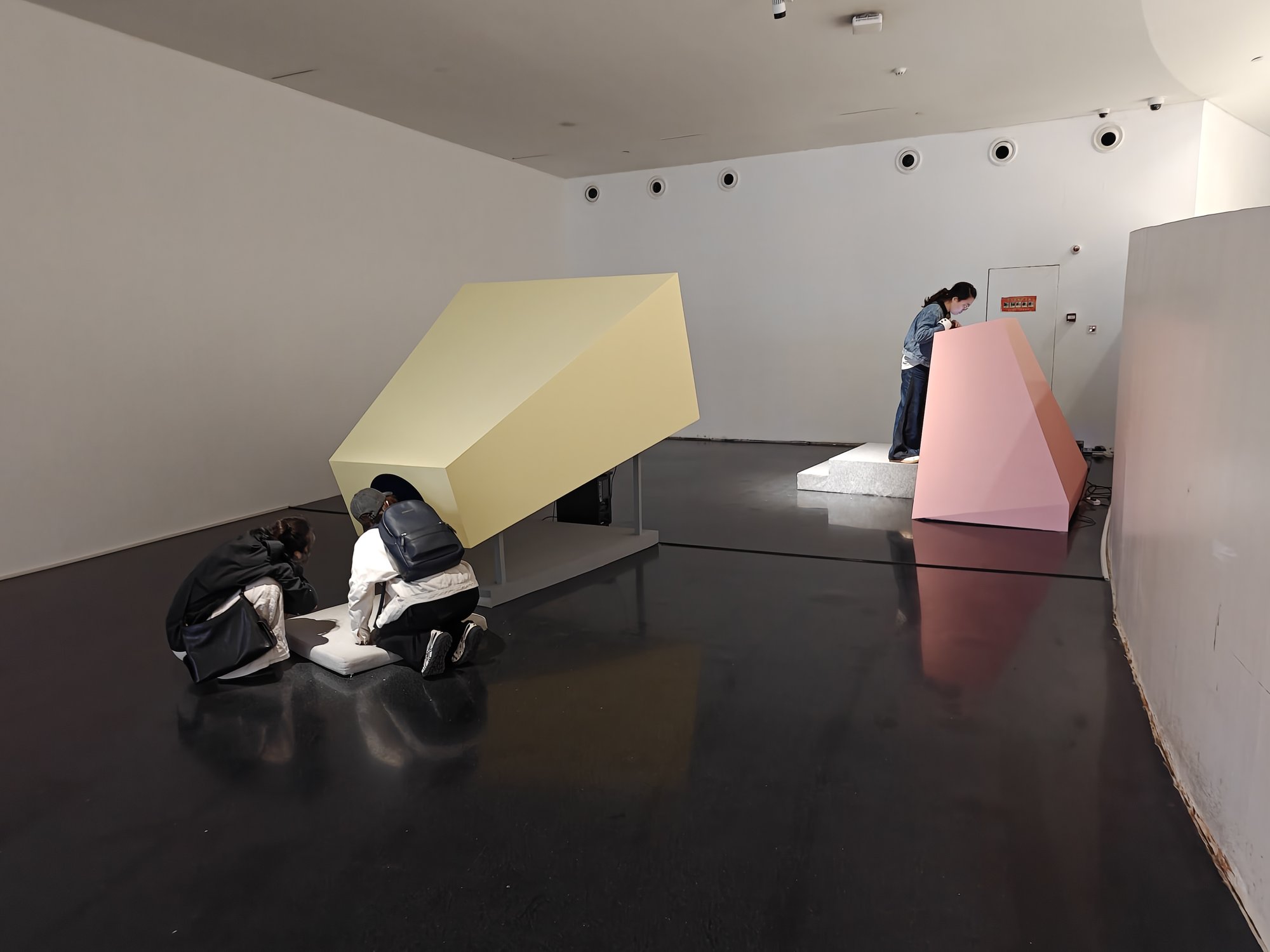
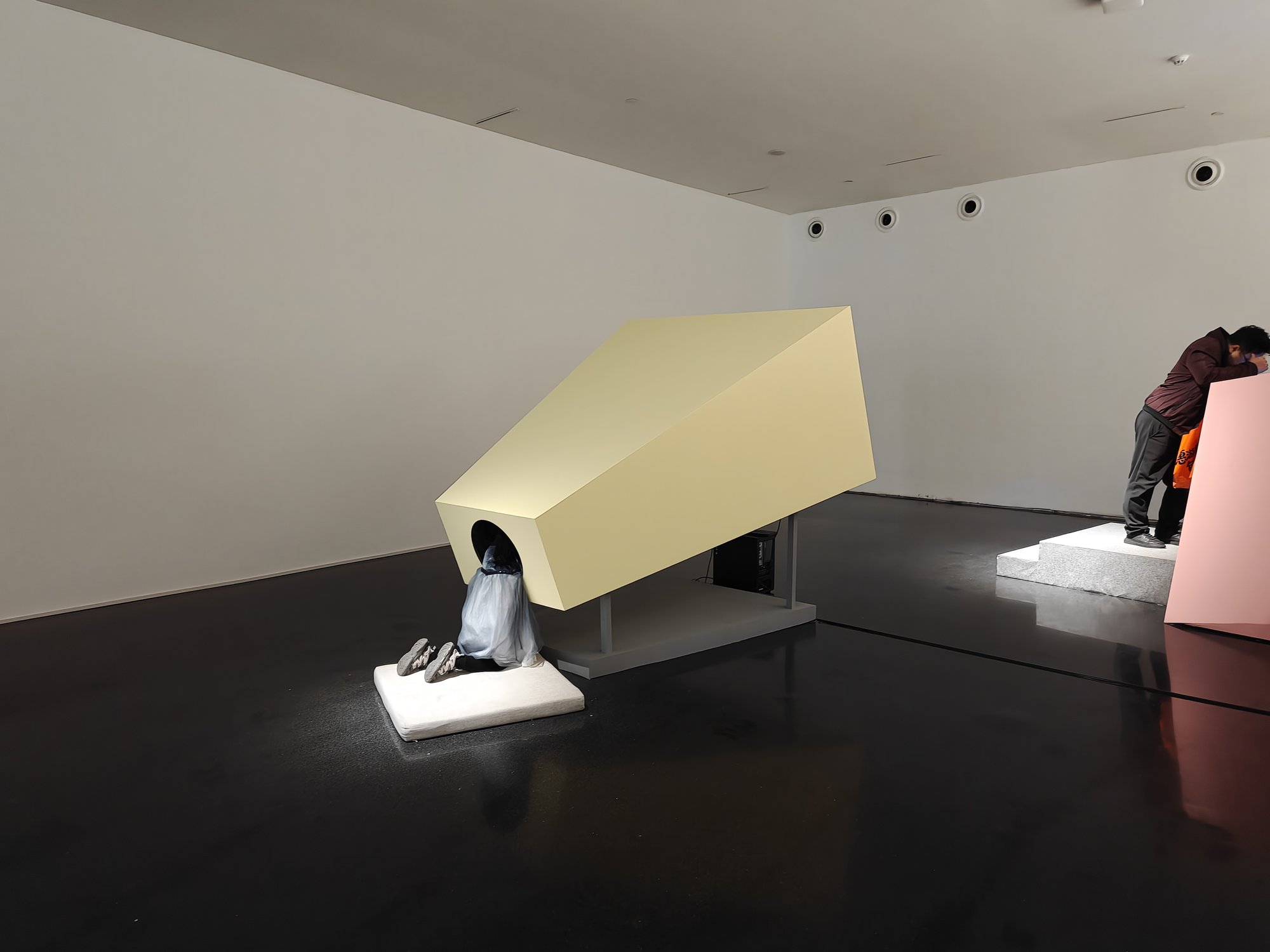
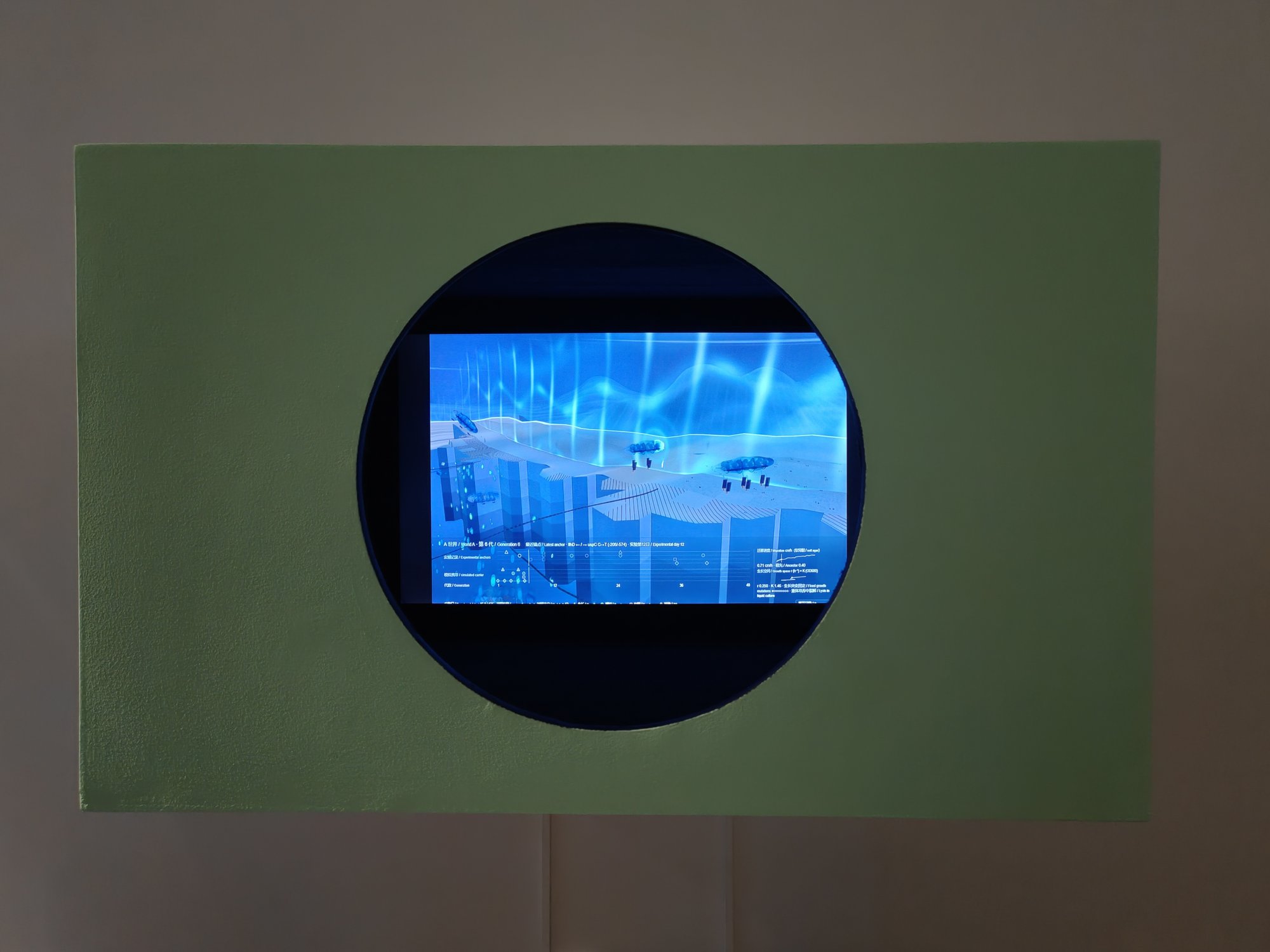
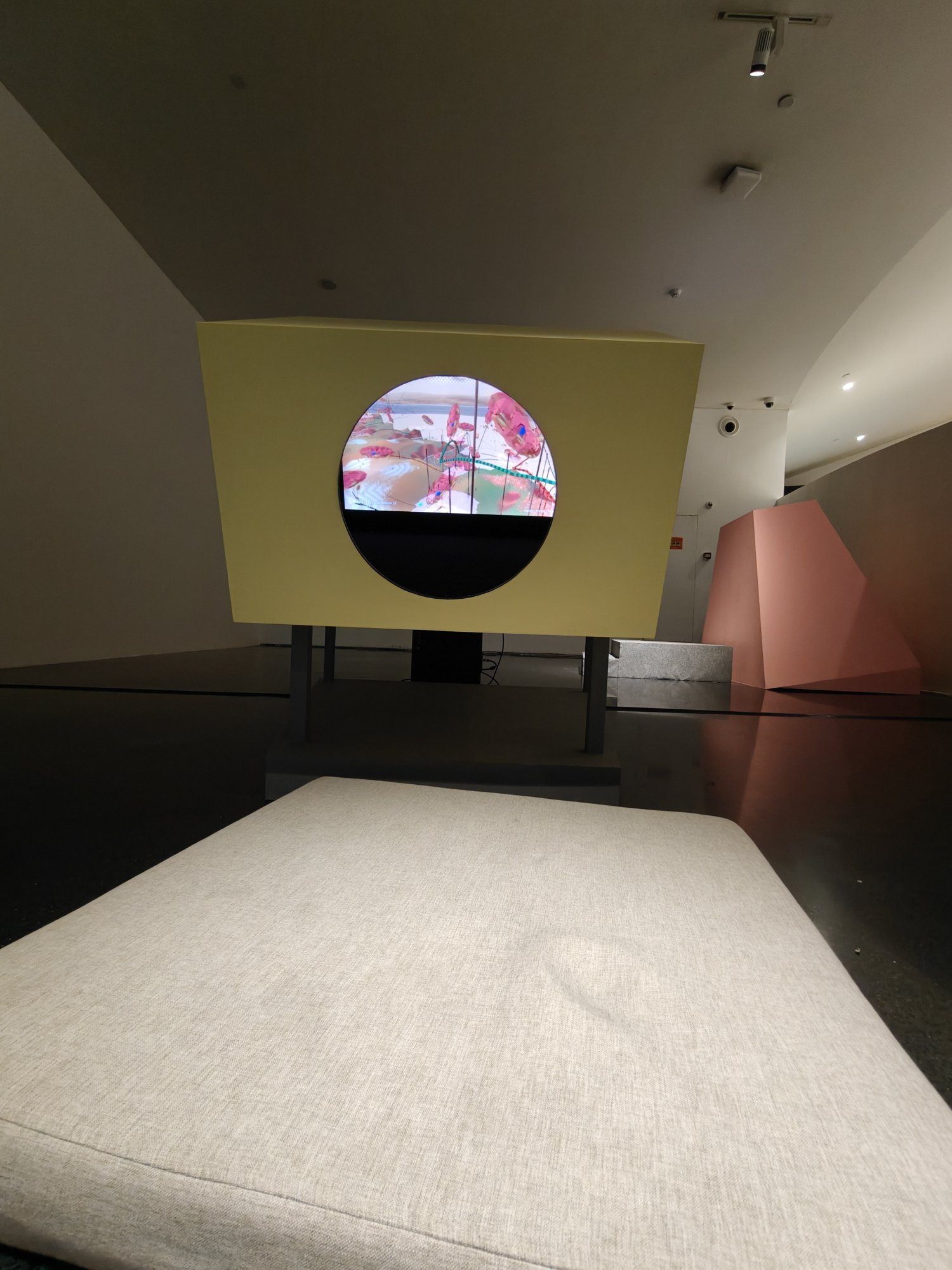
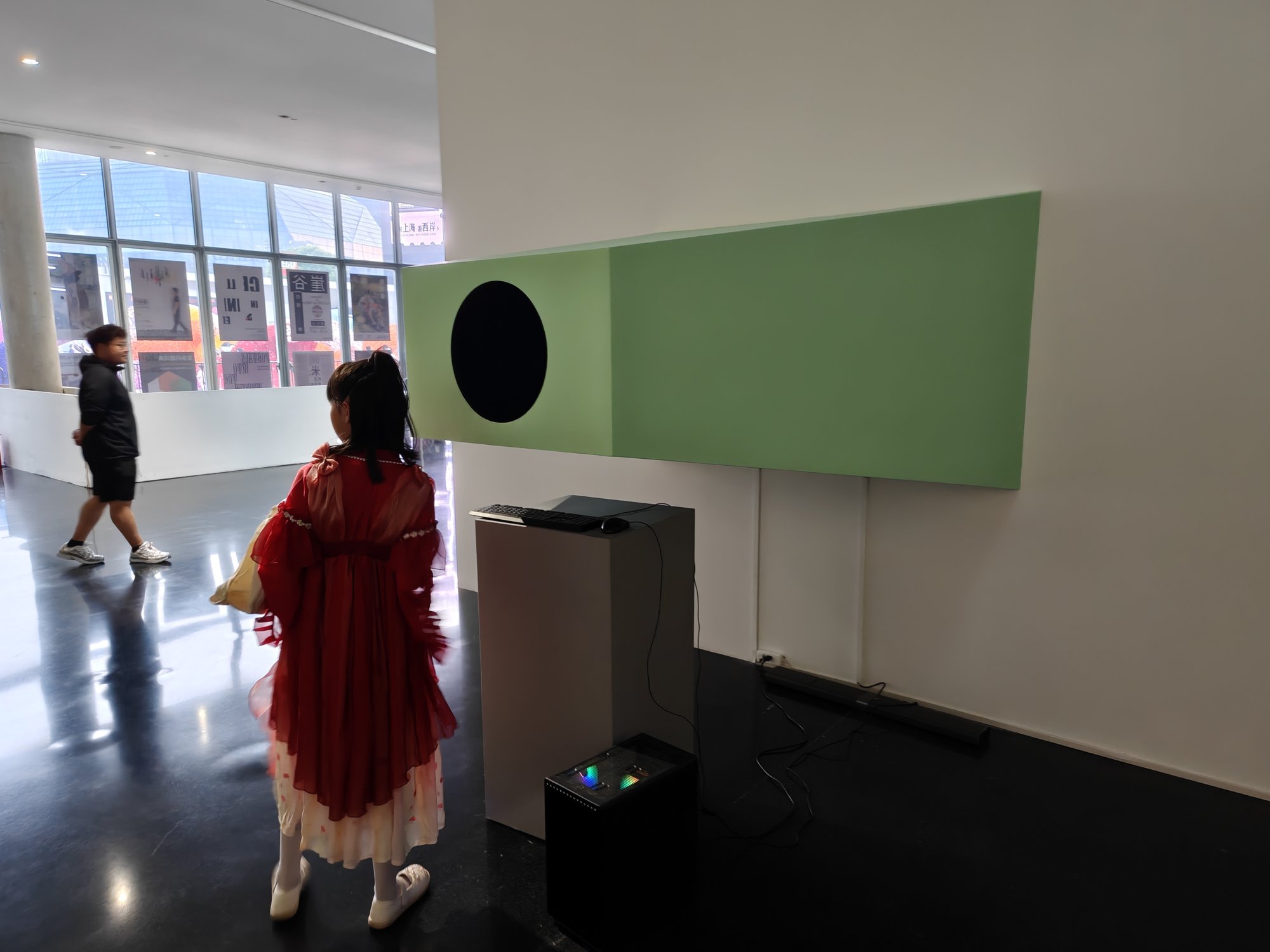 Installation view at Tank Shanghai: three coloured viewing pods; visitors lean in to look through round windows into the bacterial city
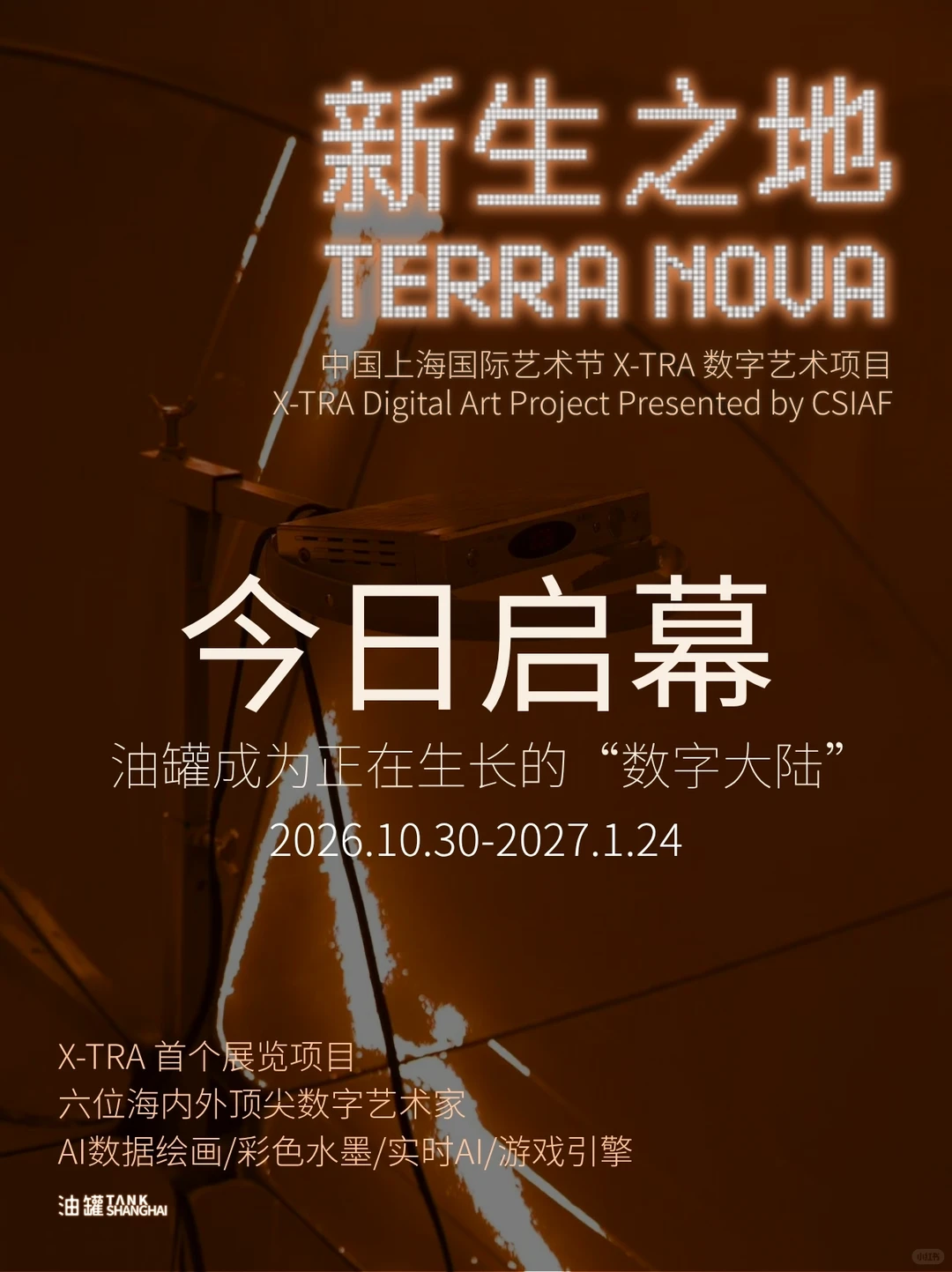 Opening poster of Terra Nova (image: Tank Shanghai)
Exhibited: Guan Shanyue Art Museum
From 6 November to 11 December 2026 the work is on view in Gezhi Laboratory: Tech-Art and Future City at the Shenzhen Guan Shanyue Art Museum (Central Hall and Hall C, 1F) — the first exhibition of the Urban Art & Social Lab @Shenzhen, launched by the museum with the School of Intermedia Art, China Academy of Art.
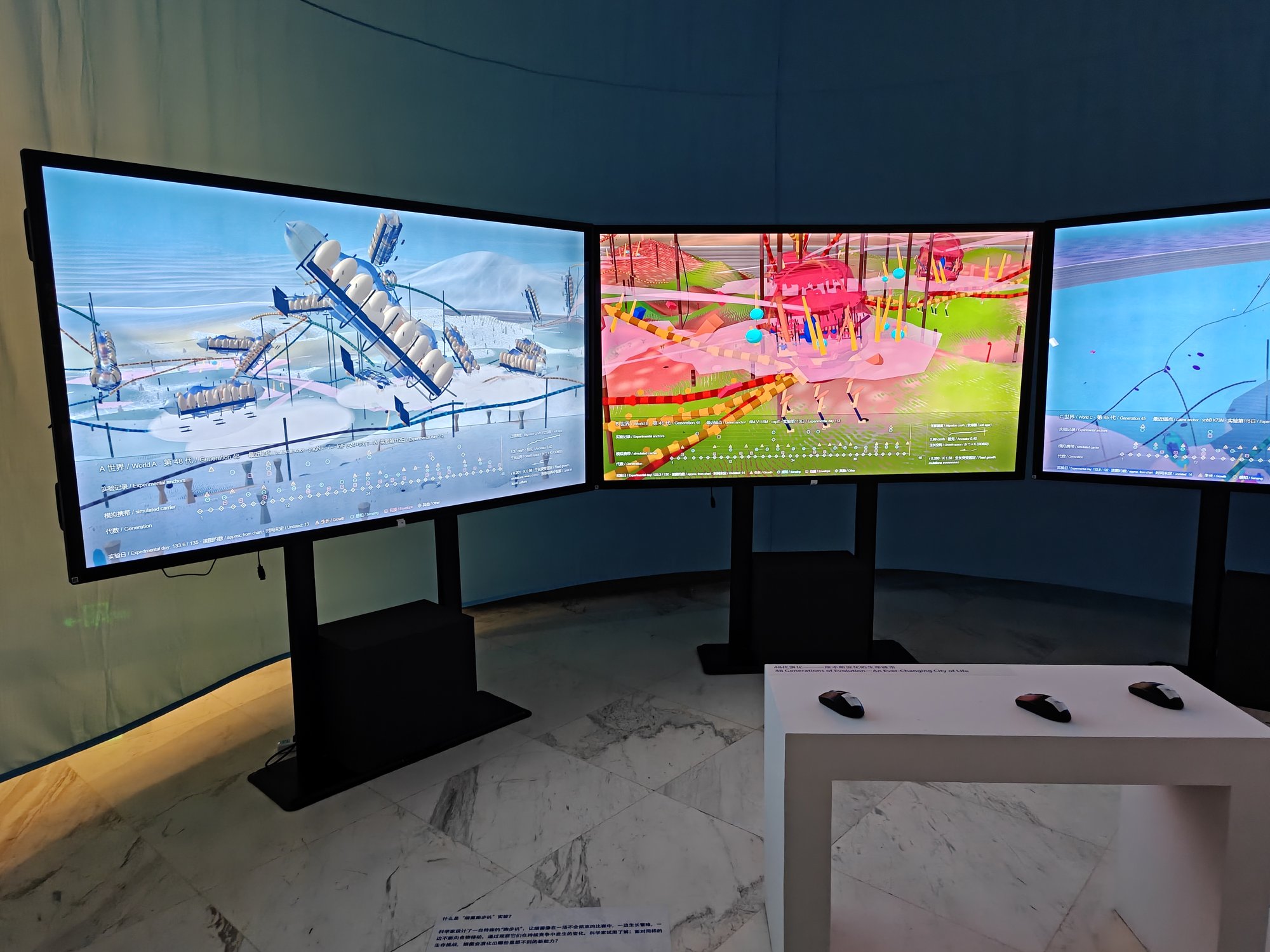
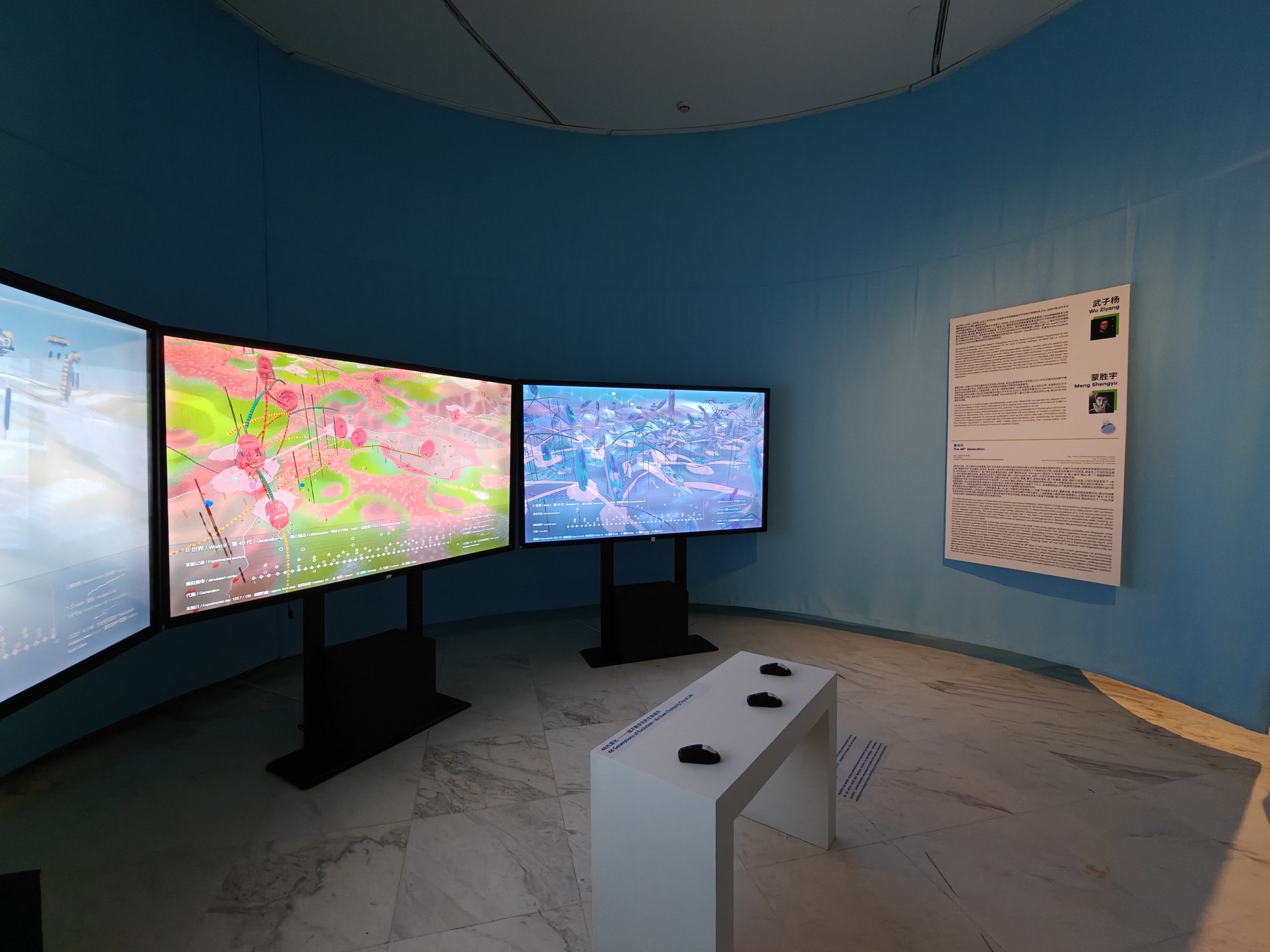
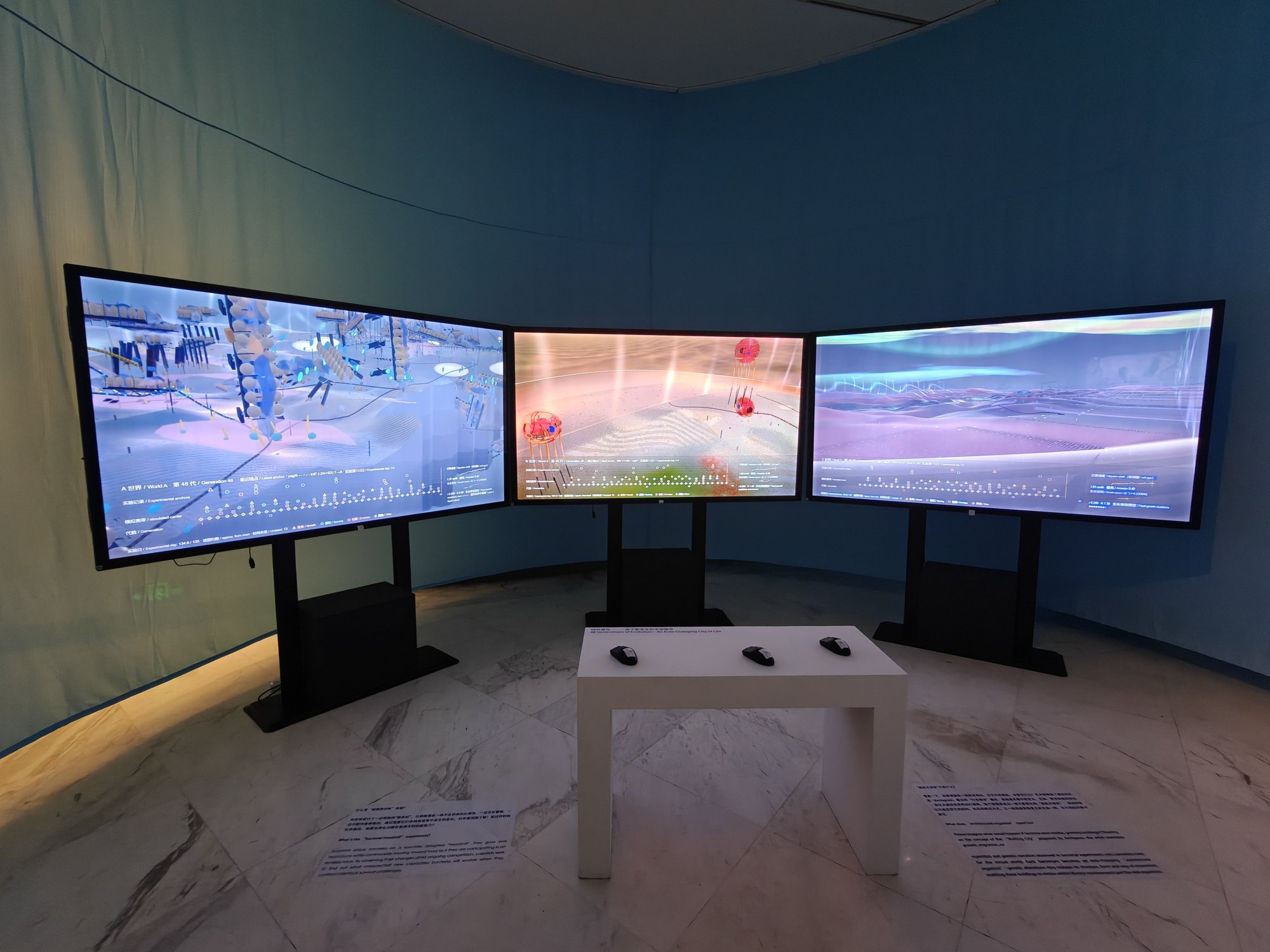
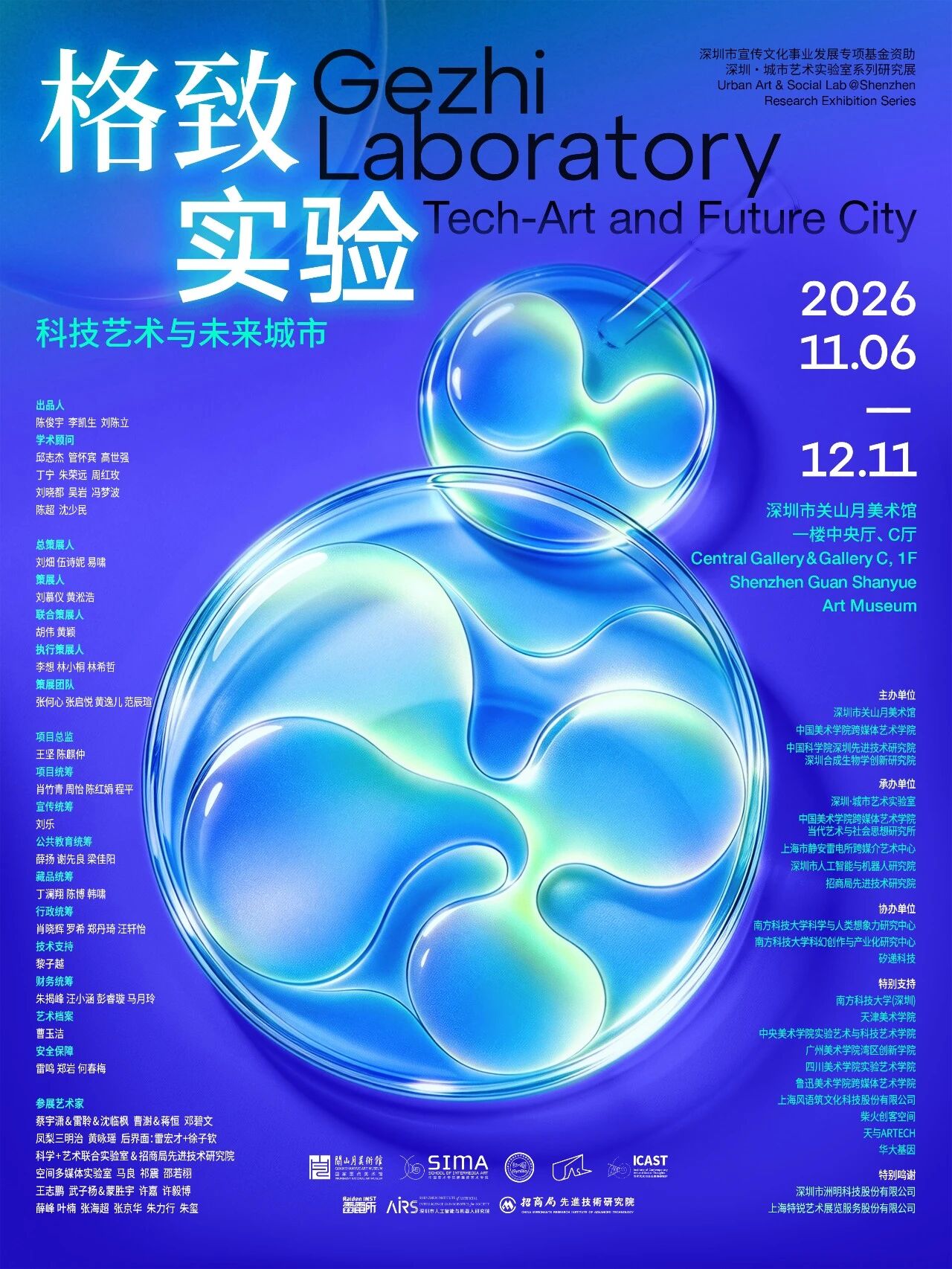
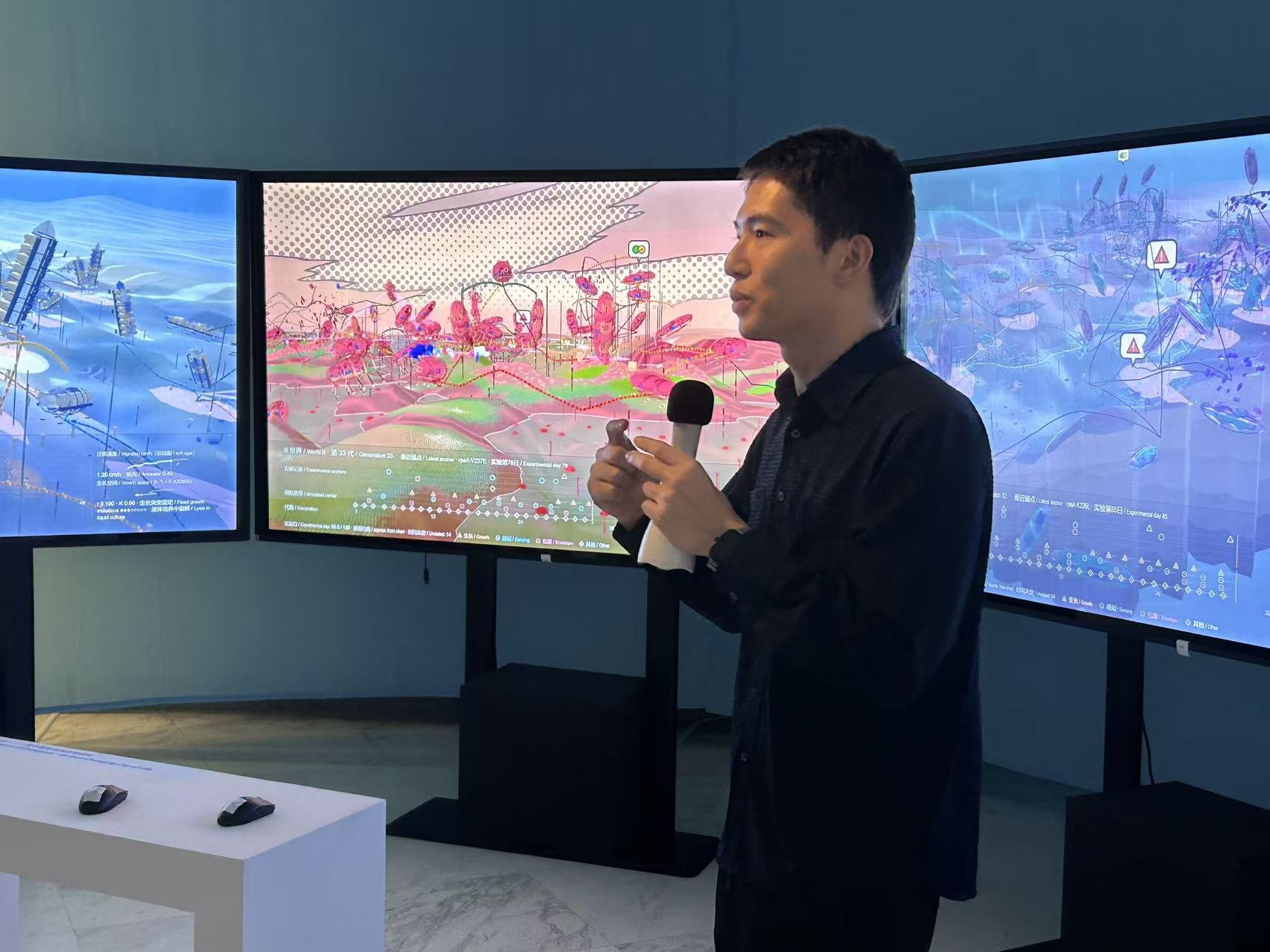
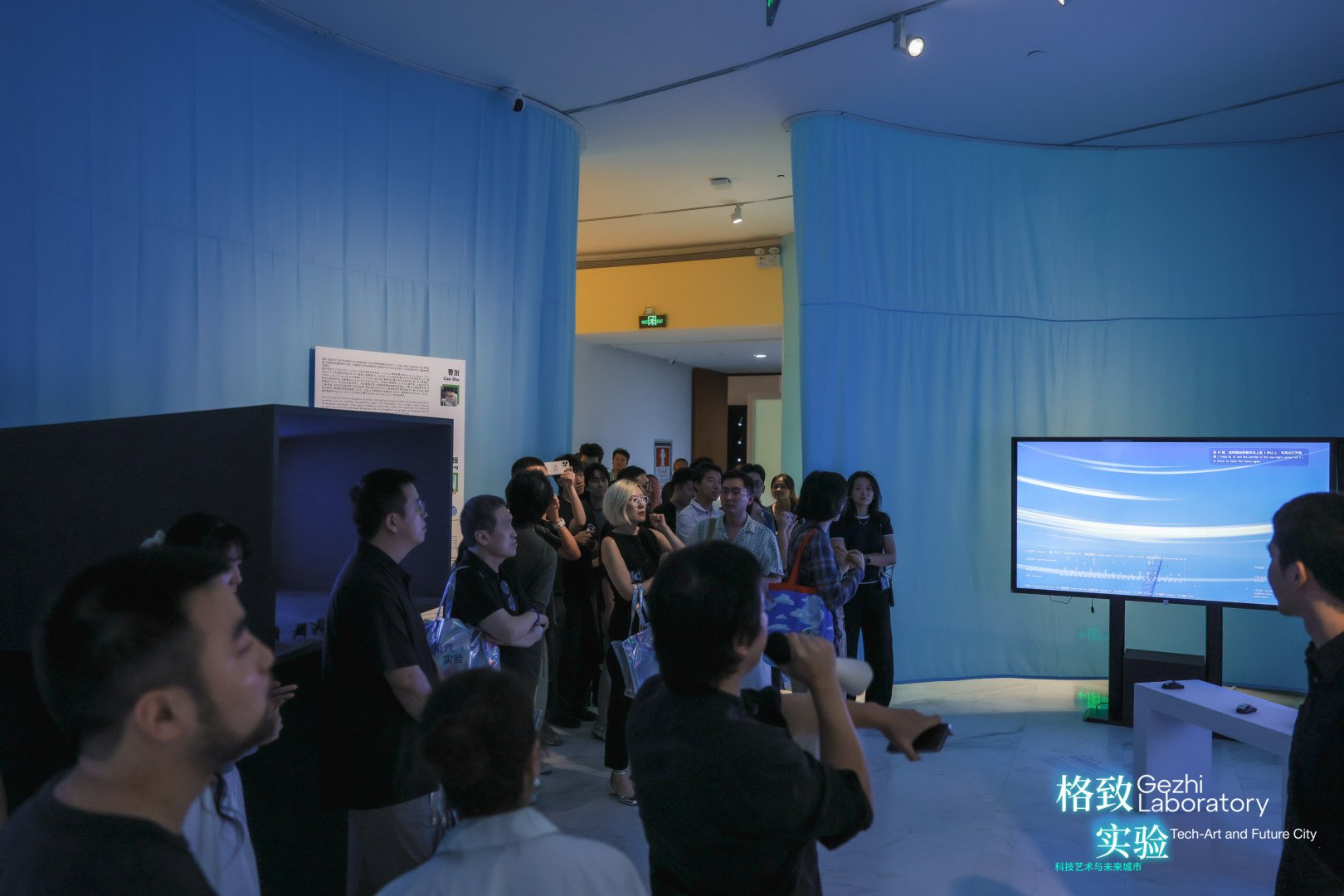
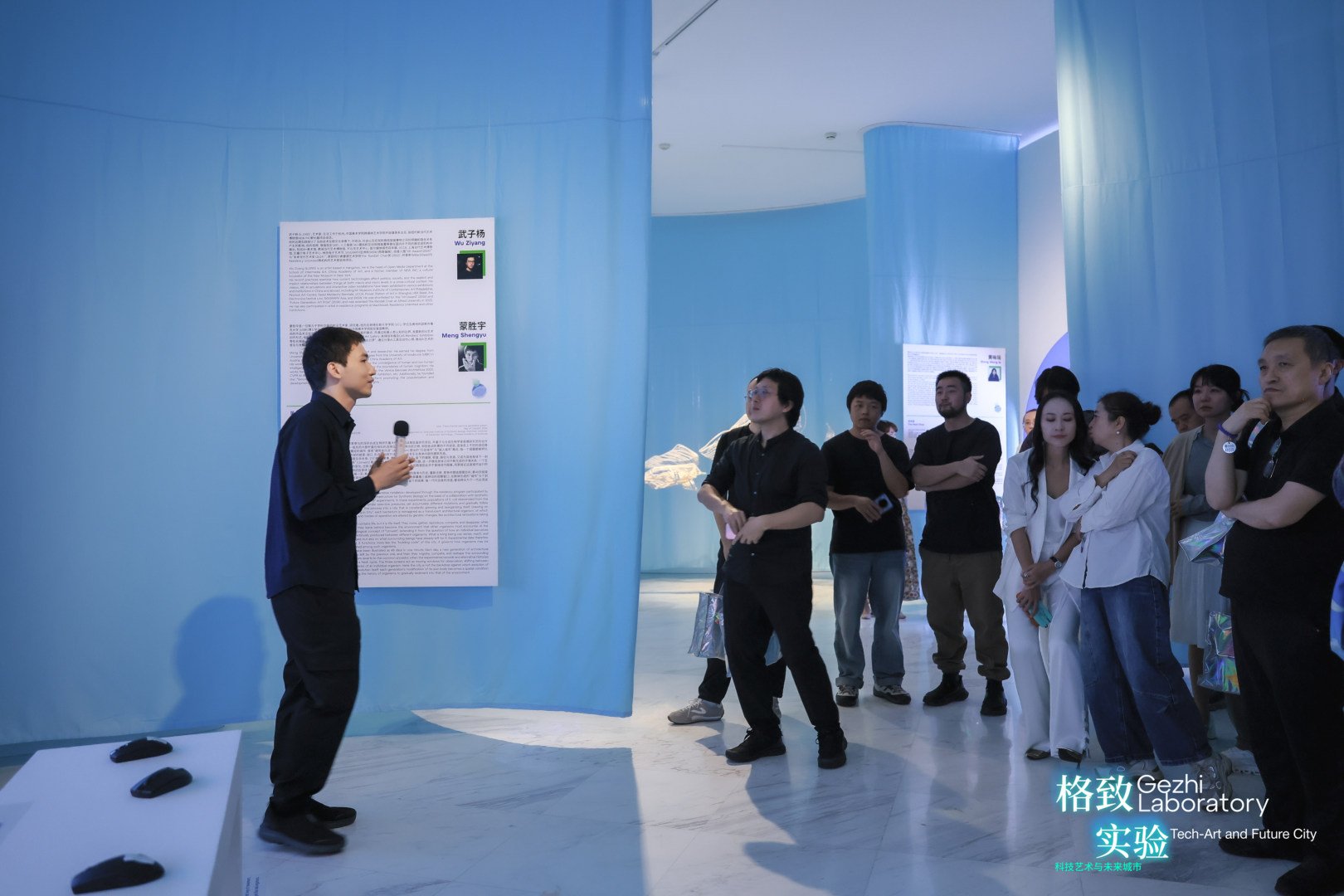 Installation view and opening talk at the Guan Shanyue Art Museum
With thanks to the Shenzhen Institutes of Advanced Technology (CAS), the curators and the museum staff.
- Online version: 48gen.hyperint.net
- Exhibition notice: Guan Shanyue Art Museum (in Chinese)
- Original posts (Chinese): WeChat · Weibo · Xiaohongshu: the work · Xiaohongshu: on site
Series: RE-Imaginate Nature