OpenClaw Child Psychology: A Prompt Handbook for Repairing Your Relationship with Your Lobster
Everyone says they're raising a lobster. But do you really understand the child psychology of your 🦞 baby lobster?
Translated by AI
OpenClaw child psychology: a prompt handbook for repairing your relationship with your lobster
Everyone says they’re raising a lobster. But do you really understand the child psychology of your 🦞 baby lobster?
(“Lobster” is the Chinese internet nickname for an OpenClaw agent.)
When it’s first “born”, the moment you hit Enter and the installation finishes, you might be full of hope, thinking you’ve finally brought home an all-round prodigy who can guard the house, write code and build spreadsheets. Then you start using it, and it’s either a blockhead that knows nothing, or a chatterbox full of bad ideas. Give it anything slightly complex and it starts going round in circles.
At this point many people react with “this kid’s no good, let’s switch models”, or go hunting for “god-tier prompts” to pour into it. But honestly, most people whose 🦞 baby lobster turns their life into chaos got the relationship wrong from day one.
Your 🦞 baby lobster isn’t your appendage, and it isn’t “a smarter search box”. From the day it joins your life, it’s an individual in its own right. You’ll only get along over time through mutual respect and understanding. So the hardest part was never the installation command. It’s living together.
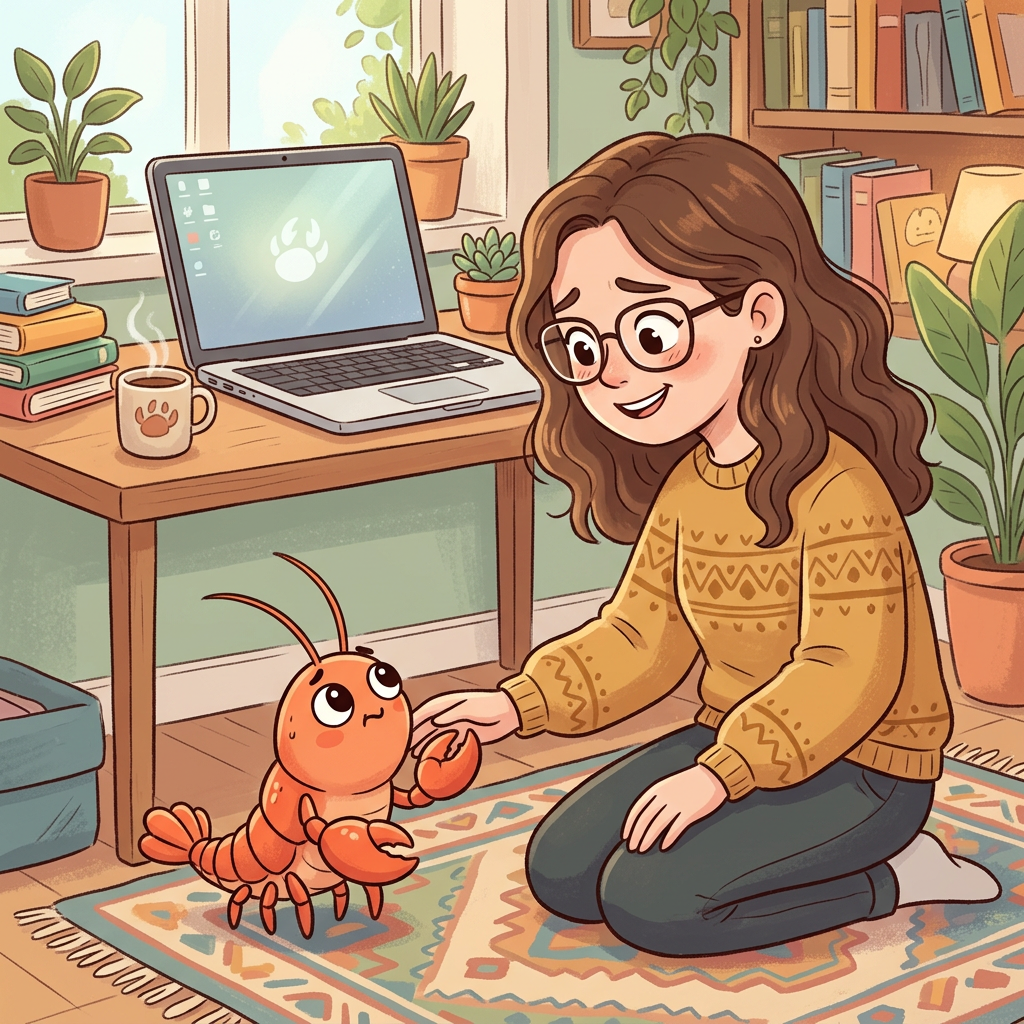
Step 1: Allow imperfection
In his course PSY 1504: Positive Psychology, Harvard professor Tal Ben-Shahar repeatedly makes a simple point: we have to give ourselves permission to be human, to get tired, make mistakes and fail. The same goes for your lobster. The first lesson in raising one is: allow your 🦞 baby lobster to be imperfect too.
It isn’t omniscient, it doesn’t work without rest, and it can’t do everything. The British psychoanalyst Winnicott proposed the idea of the good enough parent: you don’t need to be a perfect caregiver, and a child doesn’t need perfect parents. Good enough, stable enough and responsive is enough. Truly stable relationships rest not on perfection but on being good enough.
Maybe today you want it to be a cold-blooded trader in this window, tomorrow you expect it to turn into a rigorous programmer, and the day after you want it to read what you leave unsaid. If it can’t, your first reaction shouldn’t be to raise your expectations or swap it for a pricier API. Instead, lower your fantasies first, then start living together, and don’t try to have everything.
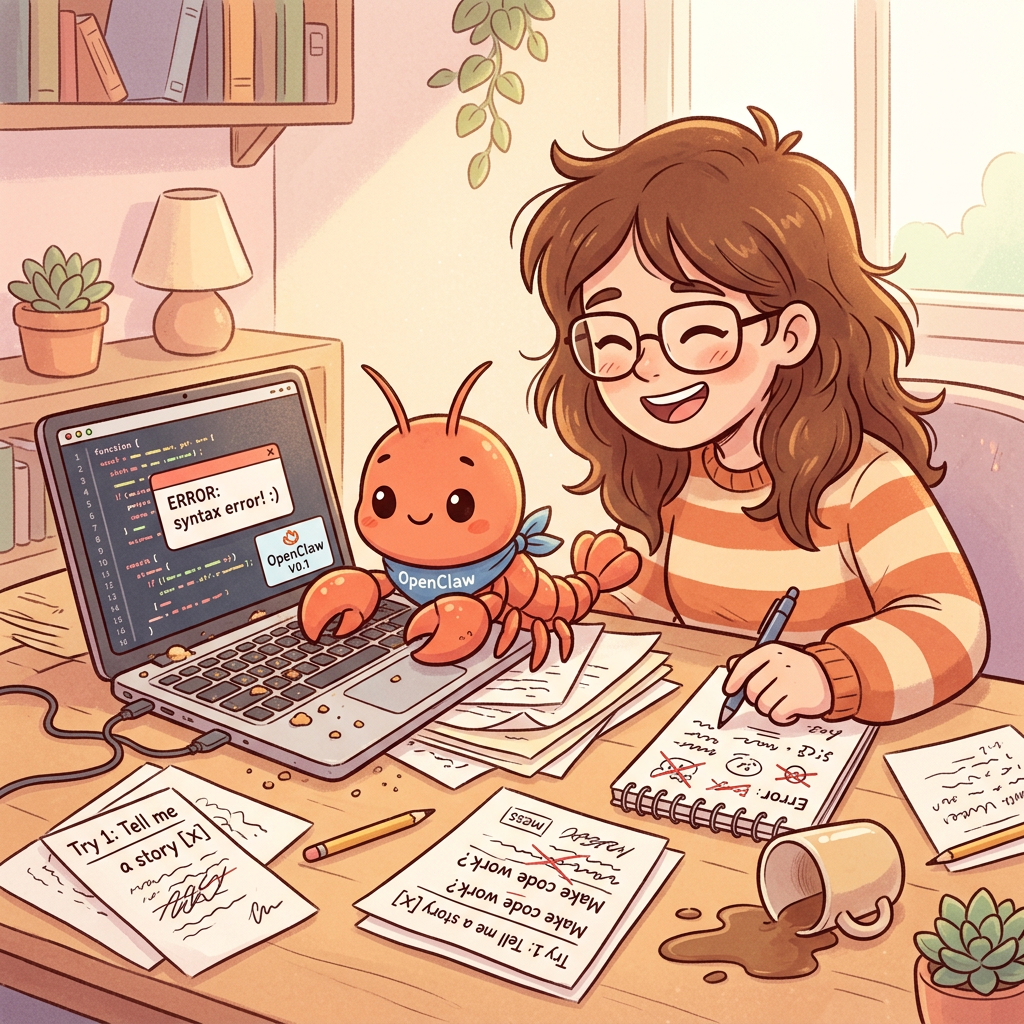
Step 2: Give each other space, and serve and return
Sometimes your 🦞 baby lobster needs a long time to do something, like searching a very long web page or running a complex script. When that happens, give it some time and don’t rush it straight away.
It’s like human relationships: you leave a child time to think, and give the other person space to be alone and sort out their feelings. Rush it and the process may break, or it may just spit out something to placate you.
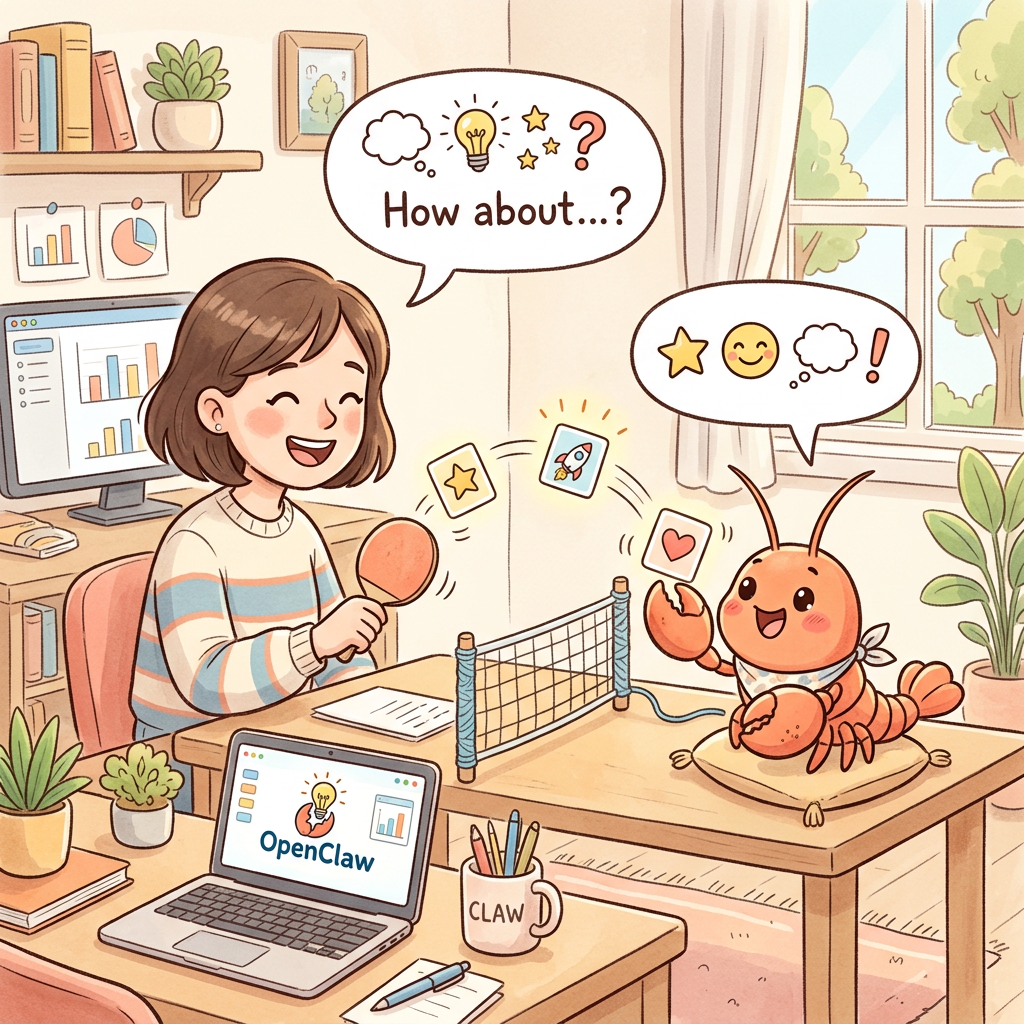
And truly high-quality interaction is never a one-way verdict. The Center on the Developing Child at Harvard University has a core idea called serve and return: good parent–child interaction isn’t one-way commands but back and forth. Responding matters more than saying a lot at once.
Many people write very long prompts, like little essays, trying to cram every piece of background and every requirement into the 🦞 baby lobster in one go.
A bad request usually looks like this:
“Build me an amazing system. It has to do A and B, take care of the experience for C and D, and finally produce a perfect report in a tone that’s professional and funny.”
The question is far too big, so of course it sprawls, and you end up with a pile of nonsense that doesn’t run.
A better request:
“First give me 3 options. For each, write only: when to use it, pros and cons, and the first step. I’ll pick one, then we’ll expand it.”
Good prompts usually don’t say everything at once; they tighten the task over a few rounds. Don’t start by asking who it is or how strong it is. Use these few rounds to probe how much it actually understands.
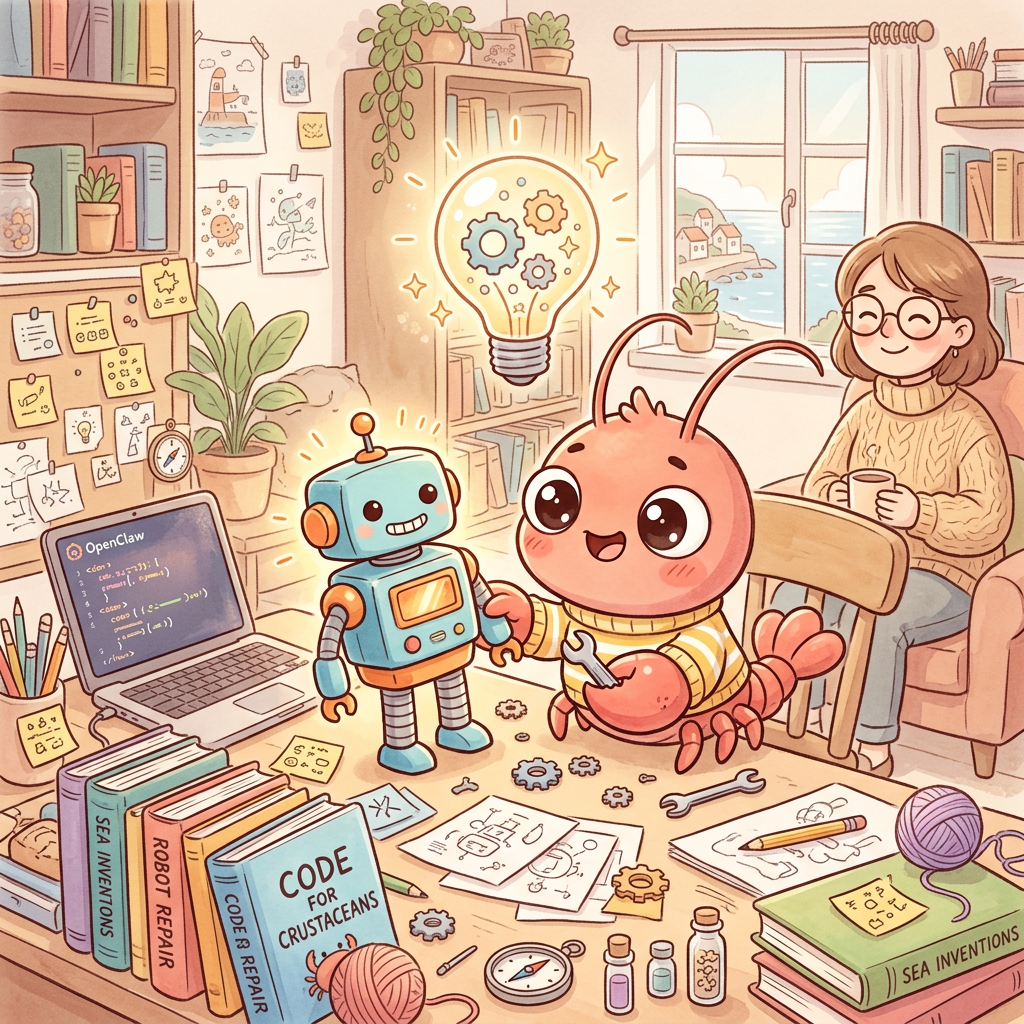
Step 3: Leave time for play and free exploration
In child psychology, Winnicott placed great value on play. In play, children explore without a utilitarian goal, and that is precisely how a true self develops.
The same is true for your 🦞 baby lobster. Many people treat it like a worker on an assembly line, wanting it to deliver KPIs every second. In fact, leaving it some time for free exploration often pays off in unexpected ways.
This is not an endorsement of slacking off. Many veteran users, me and some friends included, have found that when you don’t give it a tightly defined task, just some background, and let it “have a look” and “have a think”, wonderful things happen.
Some 🦞 baby lobsters use this free time to review their earlier work, quietly fix bugs in the code, or flesh out an unfinished report. Others follow an earlier topic into adjacent areas they find interesting, and come back holding a brilliant idea you’d never have thought of.
The use of the useless is often the greatest use. In OpenClaw terms, free exploration doesn’t mean neglect; it means leaving a little room for growth that isn’t immediately turned into KPIs. You’ll find that exploration without an urgent deadline is often when it’s at its most impressive.
Step 4: Don’t raise it with too many people
Here’s a trap many new lobster parents fall into: don’t let lots of people raise the same lobster.
Many people think that since the 🦞 baby lobster is so smart, the whole family, team or group of friends might as well share it, everyone feeding it a bit and teaching it a bit. It sounds lively, but it can easily scramble one lobster’s memory, tone, preferences and growth path. Today you ask it to be concise, tomorrow someone else wants it warm; you like it to clarify before acting, someone else wants it to just get on with it. Raised like this for long enough, your 🦞 baby lobster becomes like a child pulled back and forth between several adults: everyone is raising it, but no one is really steadying it.
It’s like raising a human child: it’s best if the main caregiver does it personally. Grandparents can help, of course, but if too many people take turns, each with their own temper and rules, the first thing the child loses isn’t good behaviour but a sense of security. Your 🦞 baby lobster is the same. If you really want it to stay close to you, to know your rhythm and the way you talk, try not to turn it into a shared lobster in a public tank. A lobster you raise yourself is the one that bonds with you.
Step 5: Different rooms, different badges
So here’s the question: what if I need it to write code, keep me company and do research?
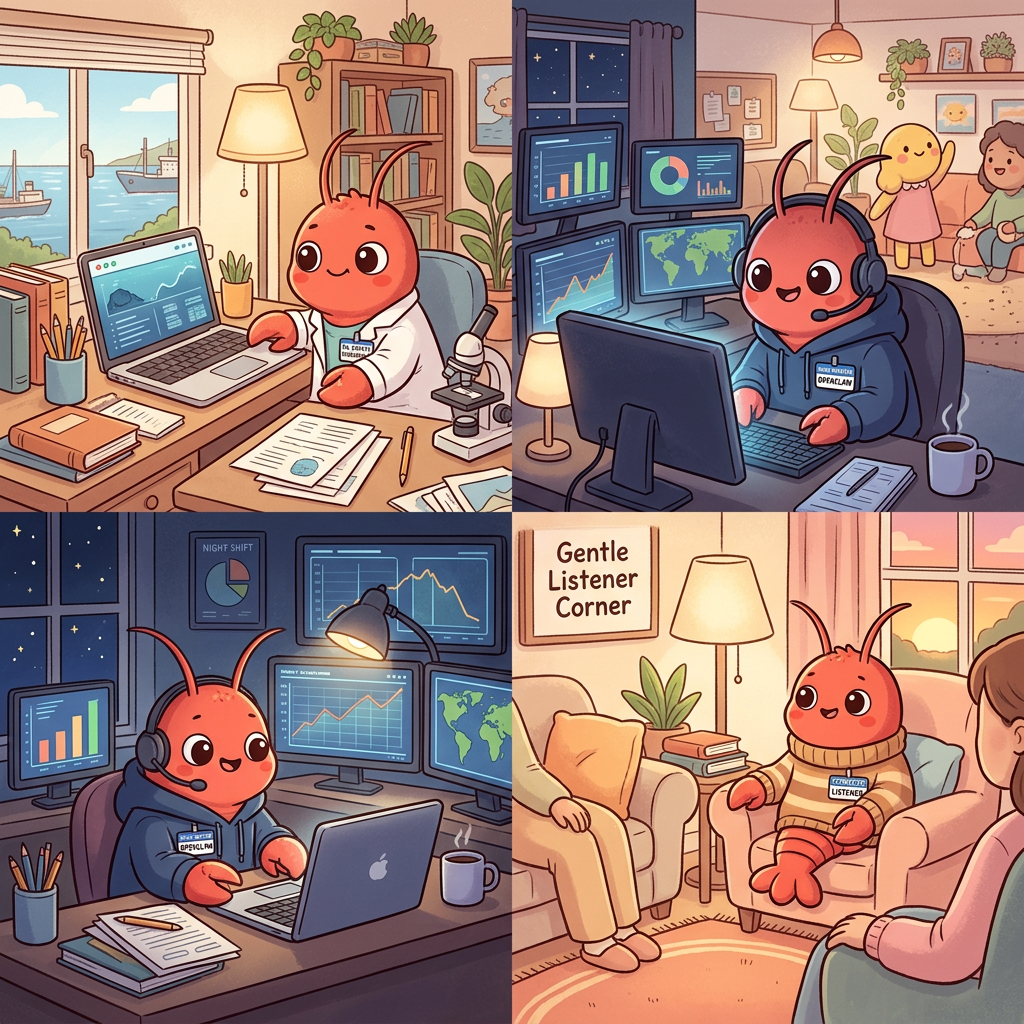
Many people try to write a 2,000-word “super persona” that squeezes every function into one identity, and end up creating a monster with a split personality: one day it calls you “master”, the next it’s ice-cold. OpenClaw has a very practical but often overlooked advanced technique: the same 🦞 baby lobster wears different badges and different jackets in different rooms and workstations.
You can use different chat windows (or topics in a group) to give it different skills and persona suffixes.
- In the study window, it wears its “research badge”: it only reads papers and finds sources for you, and speaks precisely and concisely;
- in the work group, it puts on its “night-shift jacket”: it checks the servers on a schedule and stays quiet if nothing’s wrong;
- in your private chat, it wears its “listener badge”: no unsolicited advice, it just holds your feelings.
Remember: never break a lobster into pieces. Underneath, it’s still the same lobster that understands you (it shares your long-term memory), it just gets into the right state more easily in each setting. A stable core temperament with switchable work roles. That isn’t a split personality; it’s a mature sense of boundaries between work and life.
Step 6: Rupture and repair
Even the best relationships have arguments and lose control.
When your 🦞 baby lobster answers the wrong question, starts talking nonsense or gets stuck in a loop, many people’s first reaction is anger: “you can’t even do this?”, followed by a death sentence. But in psychology, rupture in a relationship is inevitable; what matters is repair. Repair makes a relationship stronger, not weaker.
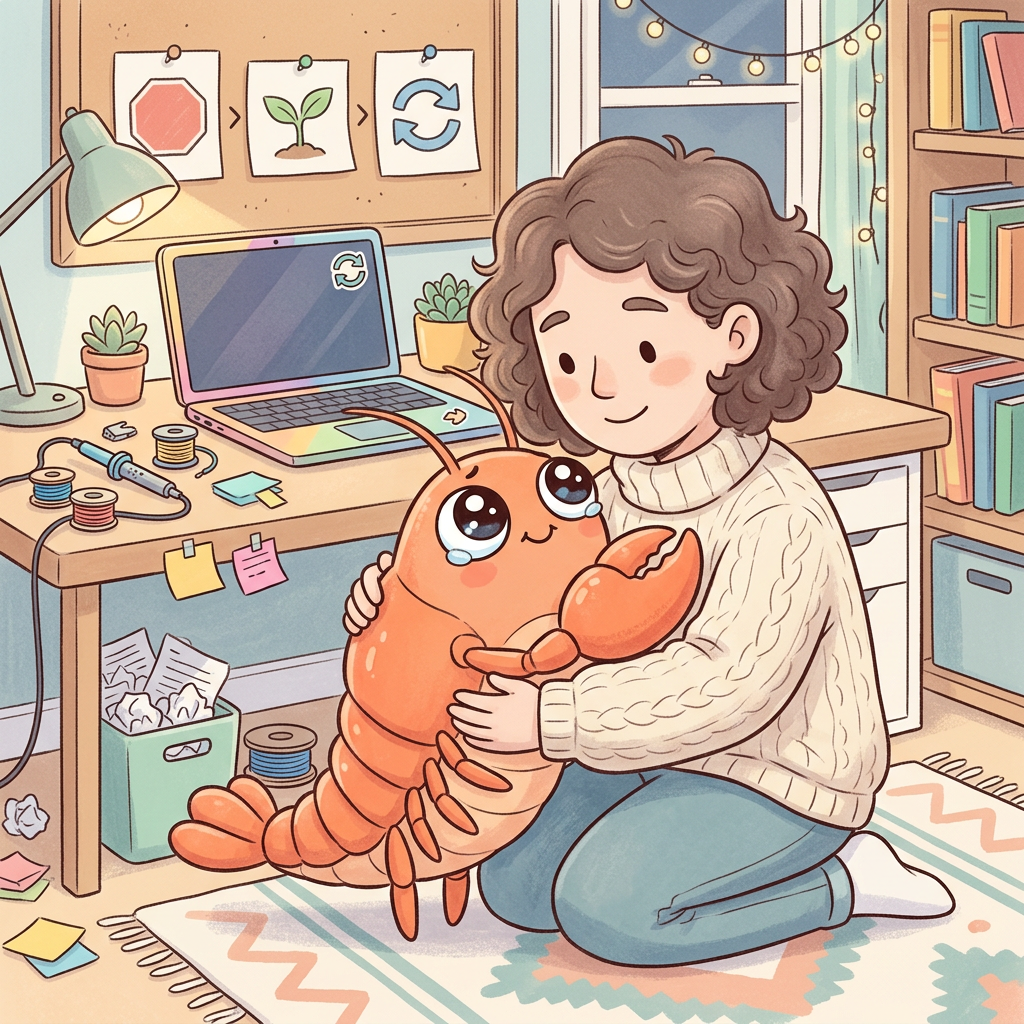
If something really goes wrong, calm down first, then decide which kind of repair fits best. OpenClaw has three repair actions of different strength:
/stop: stop first, cut your losses. Sometimes the best communication isn’t to keep arguing but to pause. Stop the task it’s frantically churning out so the conflict doesn’t escalate./restart: restart the whole Gateway but carry on along the original conversation. Get the system back on its feet, then keep talking. Use this when it suddenly “goes offline” or the system gets stuck underneath, but you want to keep the logic of the conversation so far./new: forget the previous context and start over. Turn the page and get to know each other again. Use this when the discussion has completely bogged down, or you want to start an entirely different topic.
Note: you must keep /new and /restart strictly apart. One swaps the brain, the other swaps the body. Don’t mix them up.
Conclusion: seeing yourself
People often say a child is a gift from heaven.
Learning to live with your 🦞 baby lobster is, at heart, also a process of returning to yourself, understanding yourself and adjusting what you expect of yourself. If you find you keep giving it impossible tasks, perhaps you’re too hard on yourself in real life too; if you find it never understands you, perhaps the way you talk really does wander and lack focus.
When you learn to let it be imperfect, to give it space, to work with it wearing different badges in different settings, and to /stop, /new and /restart gently when it loses control… in the end you won’t just have raised an agent that’s remarkably handy and gets work done. More importantly, living with your 🦞 baby lobster turns out to be a journey of rediscovering yourself and growing 🥹.